


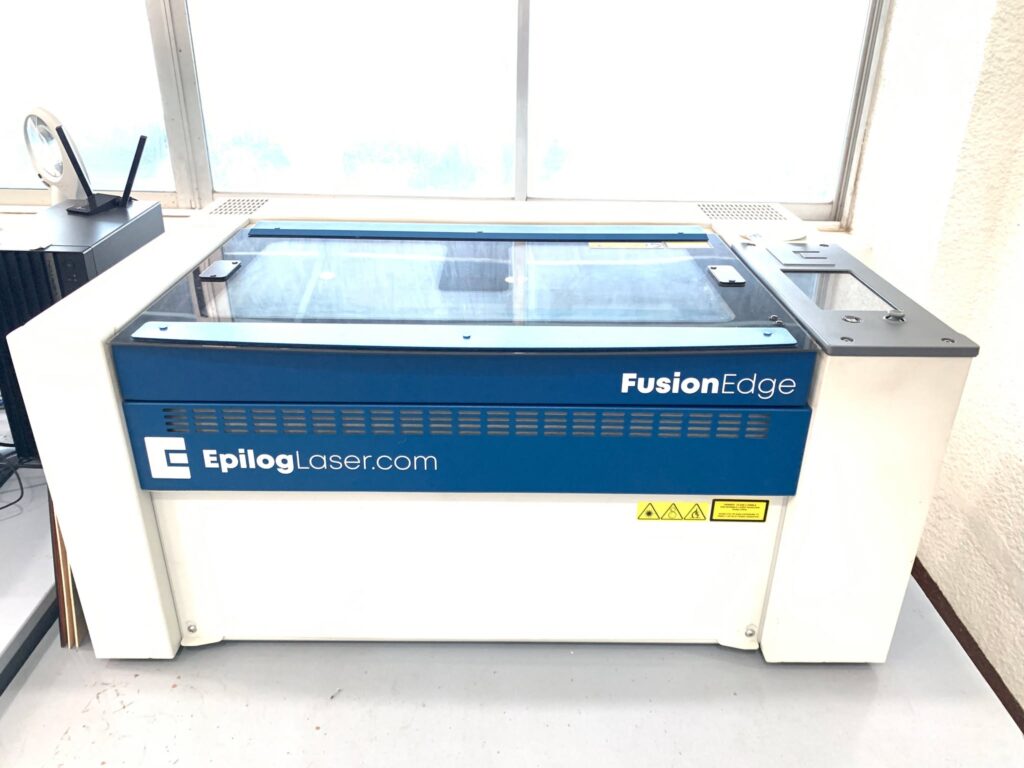
Epilog Fusion Edge 24 CO₂ Laser Cutter
Key Capabilities:
| 24 × 24 in (610 × 610 mm) work area; engraves/cuts acrylic, wood, leather, and thin metal; uses high‑speed servo motors; optional 50–60 W CO₂ laser; camera alignment and autofocus; resolution 75–1200 dpi; engraving speed up to 120 in/s. |
Software & Workflow:
| Jobs are prepared in vector design software (CorelDraw) and sent via the Laser Dashboard; operator uses onboard touch screen to focus, set power/speed and run jobs; exhaust system requiring 350–400 CFM ensures safe ventilation. |
Limitations & Safety:
| Only approved materials should be cut (no PVC or polycarbonate); never leave unattended; ensure proper exhaust and fire extinguisher; use focus gauge and secure material; remove flammable residues. |
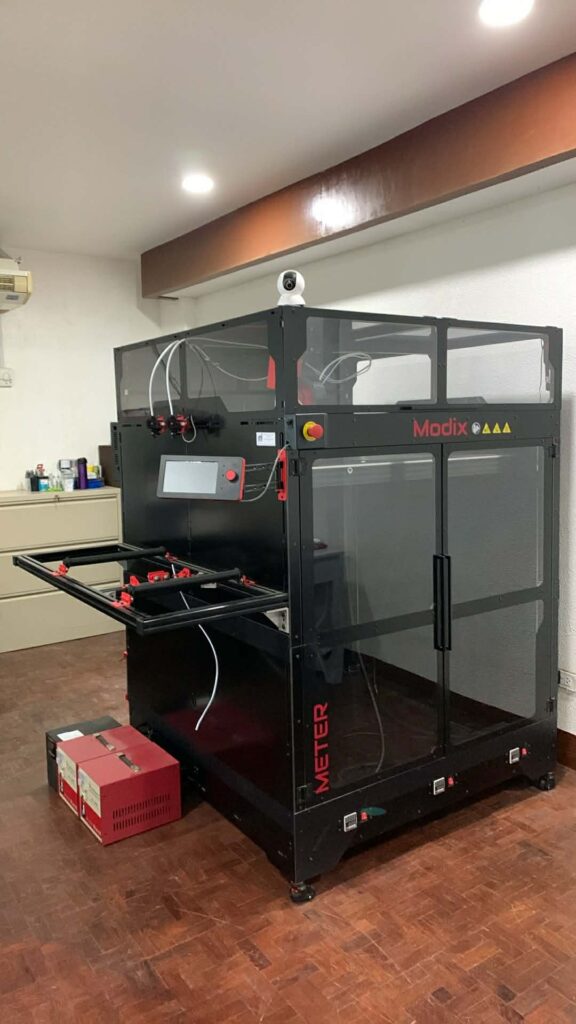
Modix Big‑Meter V4 FDM 3D Printer
Key Capabilities:
| Large print volume of 1 × 1 × 1 m; enclosed, heated chamber; Duet 2 WiFi controller; automated bed leveling and gantry calibration; supports high‑flow and high‑resolution extruders; prints PLA, PETG, ABS, TPU and carbon‑fibre‑filled filaments. |
Software & Workflow:
| Models are sliced using PrusaSlicer or Cura; prints sent over Wi‑Fi; auto‑calibration routines ensure first‑layer accuracy; prints require long times (up to several days) and careful filament management. |
Limitations & Safety:
| Requires high‑current 220 V supply; long prints risk warping or nozzle clogging; maintain clear space around machine; use proper PPE when removing prints; ensure chamber ventilation due to fumes. |
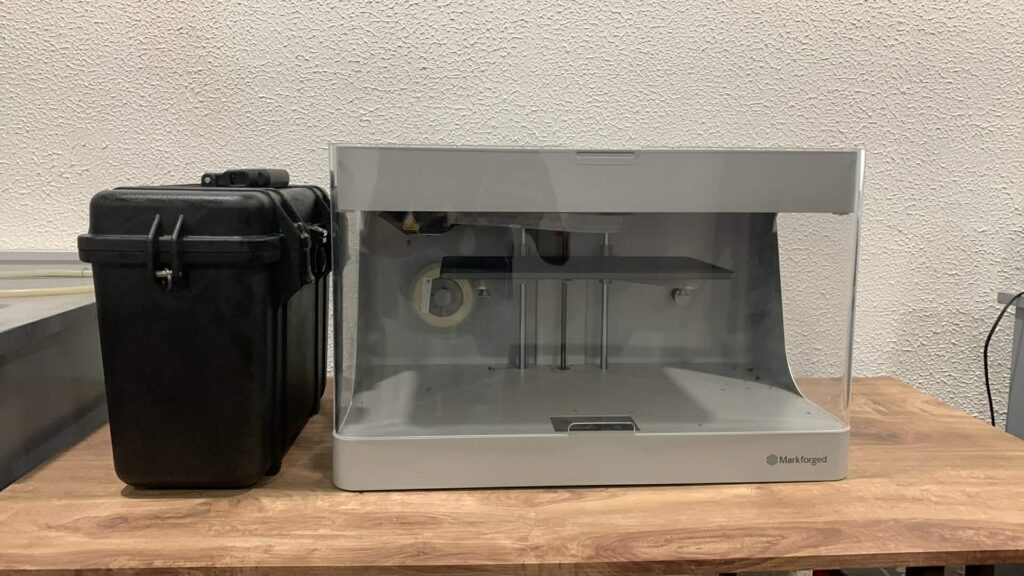
Markforged Mark II Continuous‑Fiber 3D Printer
Key Capabilities:
| Prints Onyx (nylon with chopped carbon fibre), Nylon White, and continuous fibres (carbon fibre, fiberglass, Kevlar, HSHT fiberglass) for parts with tensile strength up to 800 MPa; build volume 320 × 132 × 154 mm; kinematically coupled build plate; second‑generation extruder with out‑of‑plastic detection. |
Software & Workflow:
| Parts are designed in CAD and uploaded to Eiger cloud software; the system automatically slices and plans fibre reinforcement; prints run unattended; finished parts are heat‑cured (oven) for maximum strength. |
Limitations & Safety:
| Requires continuous fibre reinforcement training; limited to proprietary materials; high cost of consumables; handle continuous fibres carefully (sharp edges); wear gloves and safety glasses. |
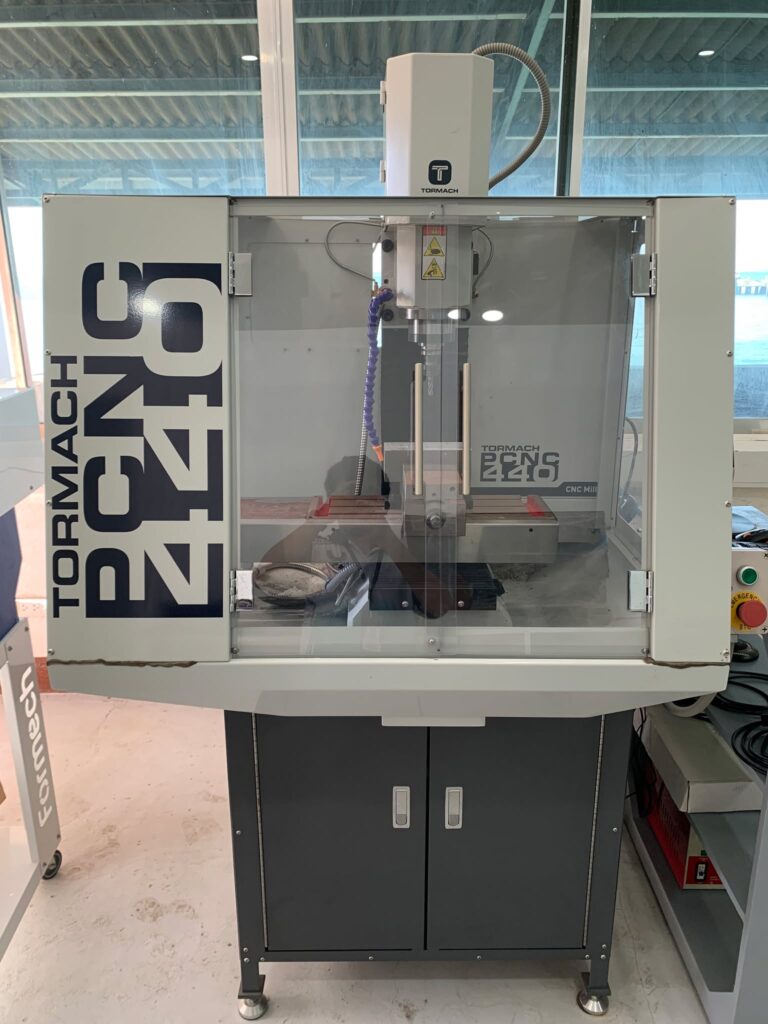
Tormach PCNC 440 CNC Mill
Key Capabilities:
| Travel of 10 × 6.25 × 10 in (254 × 159 × 254 mm); 0.75‑hp spindle up to 10 000 rpm; R8 taper; table size 18 × 6.3 in; feed rate 135 in/min (X,Y); uses PathPilot controller; capable of milling aluminium, plastics, wax and mild steel. |
Software & Workflow:
| Designs are created in CAD/CAM software (Fusion 360, PathPilot CAM) and converted to G‑code; operator sets work offsets, selects appropriate end mills, and supervises tool paths. Coolant and chip management are critical. |
Limitations & Safety:
| Users must complete CNC safety training; ensure proper fixturing; wear safety goggles and hearing protection; always keep guards closed; never reach into moving machine; emergency stop accessible. |
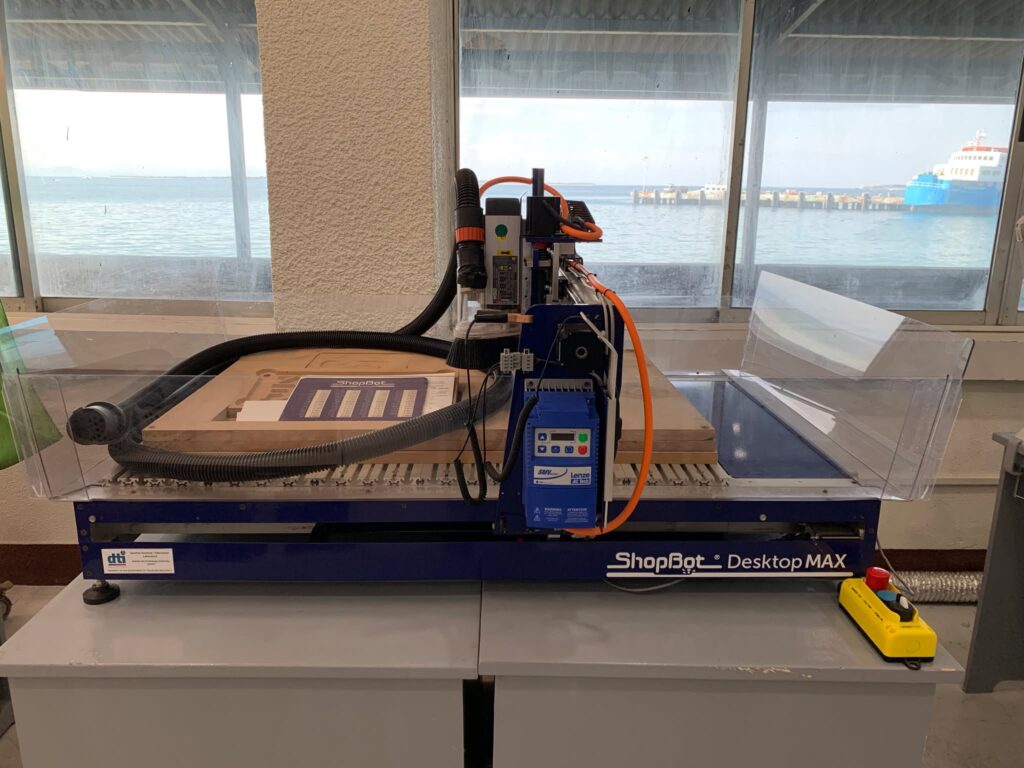
ShopBot Desktop MAX CNC Router
Key Capabilities:
| Cutting volume 36 × 24 × 3.5 in (915 × 610 × 89 mm) or 35 × 23 × 8 in with lowered deck; solid aluminium frame, THK linear rails and anti‑backlash screws; 120 V power; integrated dust skirt; VCarve Pro software. |
Software & Workflow:
| Drawings created in VCarve Pro or AutoCAD; tool paths generated and sent to the ShopBot controller; vacuum or T‑slot table secures material; operator supervises dust collection and tool changes. |
Limitations & Safety:
| Wood and soft materials only (no ferrous metals); maintain dust collection to prevent fire; wear eye and ear protection; ensure proper bit selection and feed rates. |
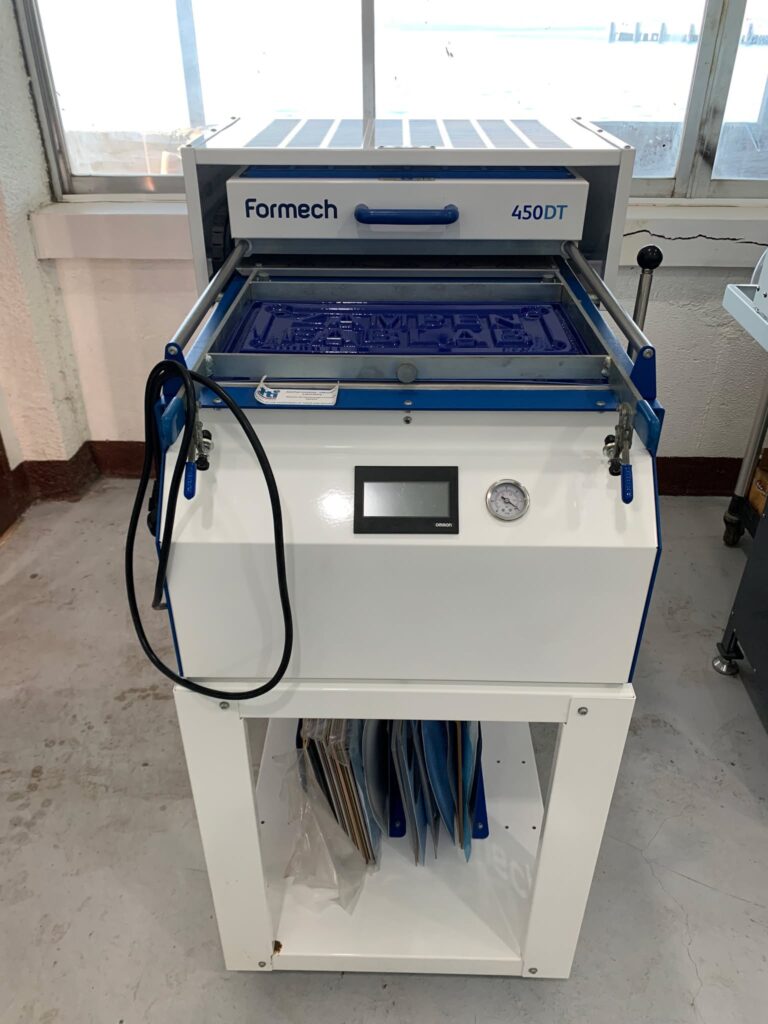
Formech 450DT Vacuum Former
Key Capabilities:
| Forming area 430 × 280 mm; sheet size 450 × 300 mm; supports plastic thickness up to 6 mm; auto‑cycle features; used for packaging, moulding and educational projects. |
Software & Workflow:
| Operator preheats plastic sheet until it sags evenly, lowers platen with mould, activates vacuum to form around the mould, and allows cooling; trimmed using bandsaw or laser cutter. |
Limitations & Safety:
| Only approved plastics (HIPS, ABS, PETG) should be used; caution with hot surfaces; wear heat‑resistant gloves; ensure adequate ventilation to avoid fumes. |
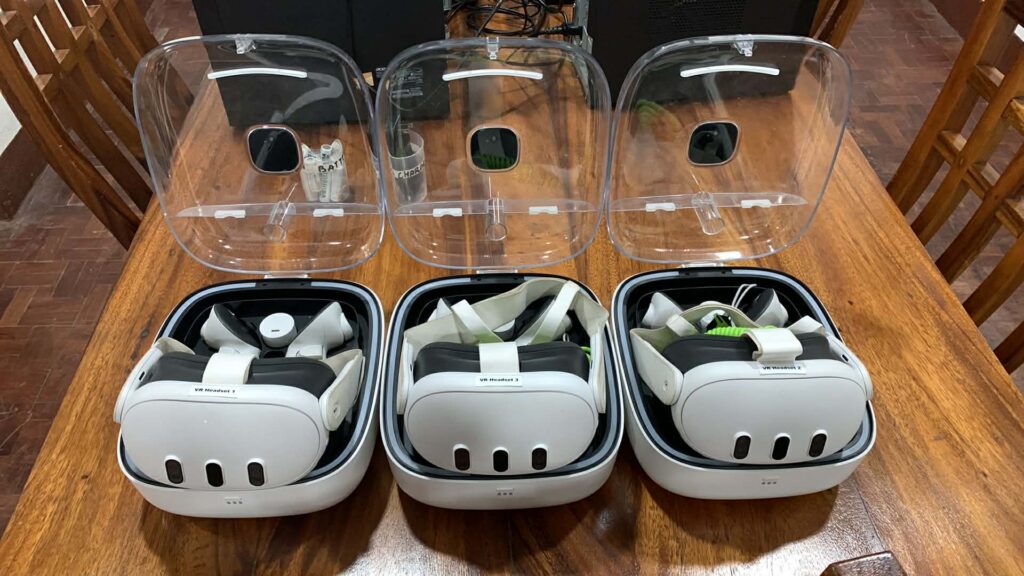
Meta Quest 3 Virtual/Mixed Reality Headset (3 units)
Key Capabilities:
| Dual LCD displays with per‑eye resolution of 2064 × 2208; pancake lenses provide better image clarity and a 40 % thinner enclosure; adjustable IPD (53–75 mm); front face contains two hybrid monochrome/infrared cameras and a 4 MP RGB camera for mixed‑reality passthrough and inside‑out tracking; powered by Snapdragon XR2 Gen 2. |
Software & Workflow:
| Uses Meta Horizon OS with hand‑tracking and body‑tracking APIs; students develop VR/AR applications using Unity or Unreal; content deployed wirelessly; integrated camera system enables mixed reality for training and simulations. |
Limitations & Safety:
| Battery life is ~2 hrs; ensure users clear play area; adjust straps for comfort; monitor for motion sickness; maintain lens cleanliness; and follow local age restrictions for VR use. |
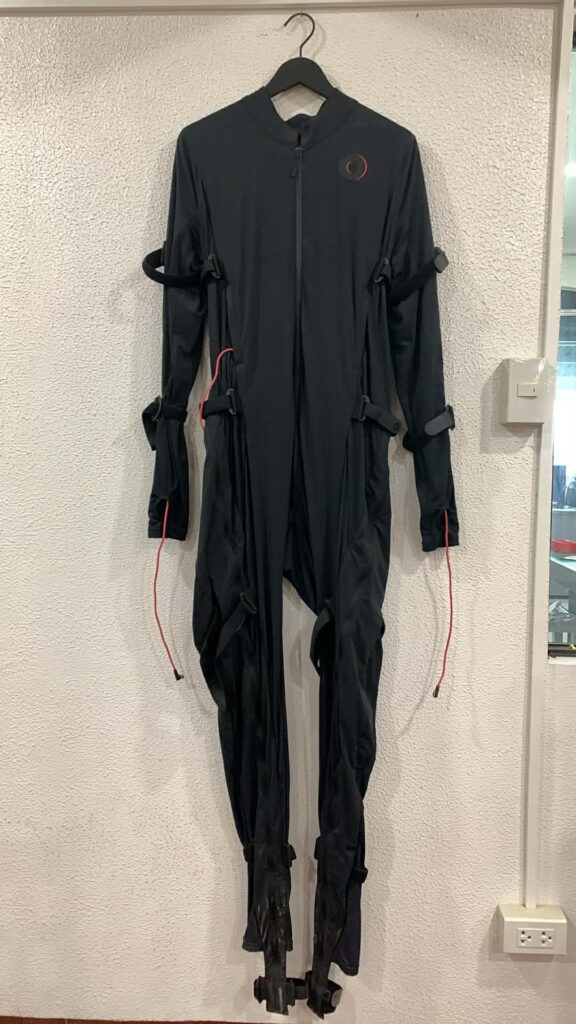
Rokoko Smartsuit Pro II Motion Capture Suit
Key Capabilities:
| A textile suit embedded with 19 wired 9‑DoF IMU sensors (17 sensors in glove‑ready version); high sensor frame rate up to 200 fps; elevation tracking and 16 g G‑force range; Sensor Fusion 2.0 algorithms reduce magnetic drift; Wi‑Fi range up to 100 m. |
Software & Workflow:
| Connects wirelessly to Rokoko Studio; students calibrate sensors, capture real‑time motion and export to Unity/Blender; used for animation, biomechanics research and interactive installations. |
Limitations & Safety:
| Ensure snug fit and proper sensor placement; avoid metallic clothing; calibrate before recording; maintain battery pack; provide adequate space to prevent collisions; data privacy considerations. |
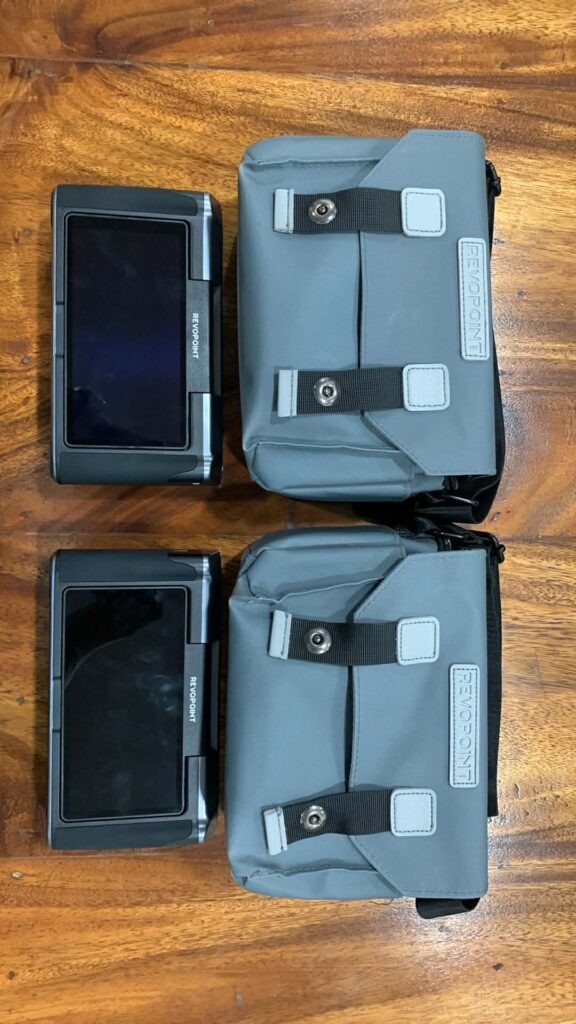
Revopoint MIRACO 3D Scanner (2 units)
Key Capabilities:
| Standalone scanner with quad‑camera infrared structured‑light system; up to 0.02 mm precision and 0.05 mm accuracy with 15 fps scanning speed; 48 MP RGB camera for 8 K colour capture; two capture modes (single‑shot and continuous) and 9‑axis IMU; adjustable 6” 2K AMOLED screen and 2‑hour battery. |
Software & Workflow:
| Students scan objects in near‑ or far‑mode; post‑process meshes directly on device (fusion, meshing, editing); export models via Wi‑Fi 6 or USB‑C; models imported into CAD/VR/AR workflows. |
Limitations & Safety:
| Keep scanning distance 100–1000 mm; avoid shiny/transparent surfaces (use scanning spray); secure object on turntable; calibrate before scanning; handle device carefully; ensure eye safety when using infrared light. |